
Sex Offender Checks in Barbour County
The Alabama Law Enforcement Agency registry overview is the official starting point for a Barbour County sex offender check. ALEA's Criminal Justice Information Services division maintains the statewide registry, while Barbour County law enforcement registers and verifies local residents. Local officers send identifying data, photographs, and fingerprints to the state system. ALEA says public data refreshes daily in real time from those submissions. That makes the state page the public record channel and the Sheriff's Office the right verification channel when an address seems wrong.
A Barbour County registry search is narrower than a criminal court or history search. It covers people subject to Alabama's registration law after a qualifying conviction and release. Some juvenile, youthful-offender, out-of-state, and due-process situations may not be public. Start with a name or location in a normal browser, review the resulting profile, and use the national search when a person or address may cross state lines. Do not treat an empty result as a clearance certificate.
The ALEA overview and FAQ explains why local agencies control changes.
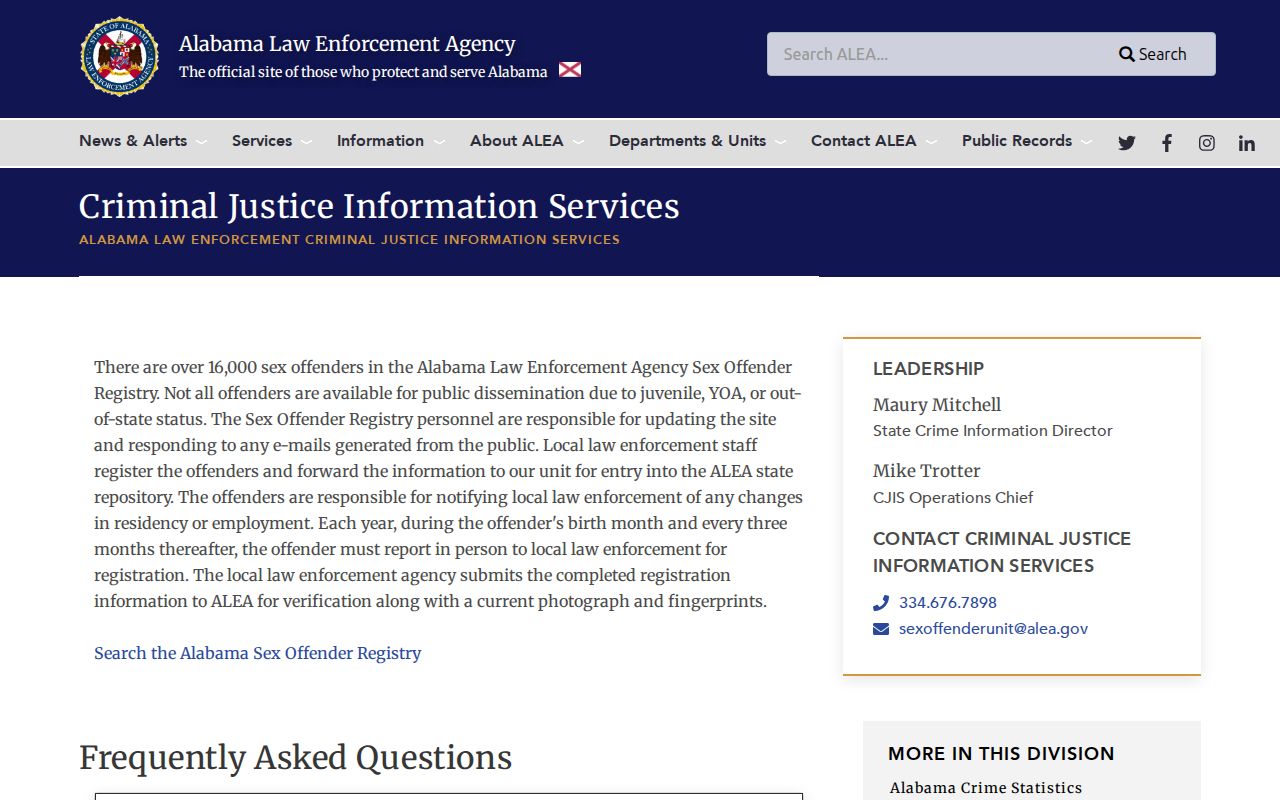
The image marks the official route into Alabama's registry rather than a commercial people-search service.
How Barbour Registry Updates Move
A Barbour County update follows a clear chain: registration or verification with Barbour County law enforcement, collection or confirmation of the photograph and fingerprints, transmission to ALEA CJIS, and publication through the state registry when the record is eligible for public display. This split explains why ALEA directs questions about an inaccurate address or possible noncompliance to local law enforcement. The state publishes what the local agency submits, but the local agency can check the address and report a correction.
Barbour County Sheriff's registration and compliance work is handled through the office on Robertson Airport Drive in Clayton. Call 334-775-3434 before going there. The research found no published appointment schedule, direct registry-officer line, local fee, or confirmed division of registration work between every city police department and the sheriff. A phone call avoids assuming that the public counter accepts unscheduled registration matters.
Note: A Barbour County address concern belongs with local law enforcement, while a registry search belongs on ALEA's public system.
How to Search the Alabama Sex Offender Registry
For a Barbour County search, use the ALEA Community Information Center to reach the registry service. The vendor search page blocked automated inspection during research, so only the public entry service and its broad name or location lookup were verified. Exact field labels, radius choices, alert controls, sort tools, and pagination were not exposed. Check the live controls in a normal browser instead of relying on unverified instructions.
- Open ALEA's official registry entry and complete the vendor disclaimer or challenge shown in the live browser.
- Use the available name or geographic lookup controls. Confirm each label and option on the live form before entering a query.
- Compare the result with known identity details, especially the photograph, aliases, physical description, and address.
- Read the conviction and compliance fields, then call Barbour County law enforcement about a local address discrepancy or suspected violation.
The verified Barbour County inventory is limited because the live vendor challenge blocked the underlying form. Unknown controls remain unknown.
| Field Label | Type | Required | Notes |
|---|---|---|---|
| Registry entry | Service link | No account shown | Free public entry point |
| Name search | Live vendor control | Verify live | Exact fields were blocked during research |
| Location search | Live vendor control | Verify live | Exact geographic options were not exposed |
| Alerts or subscriptions | Not verified | Unknown | Do not assume a radius or delivery method |
| Results, sort, pages | Not verified | Unknown | Confirm controls in a normal browser |
The Community Information Center screen shows the state service used for a Barbour County registry lookup.
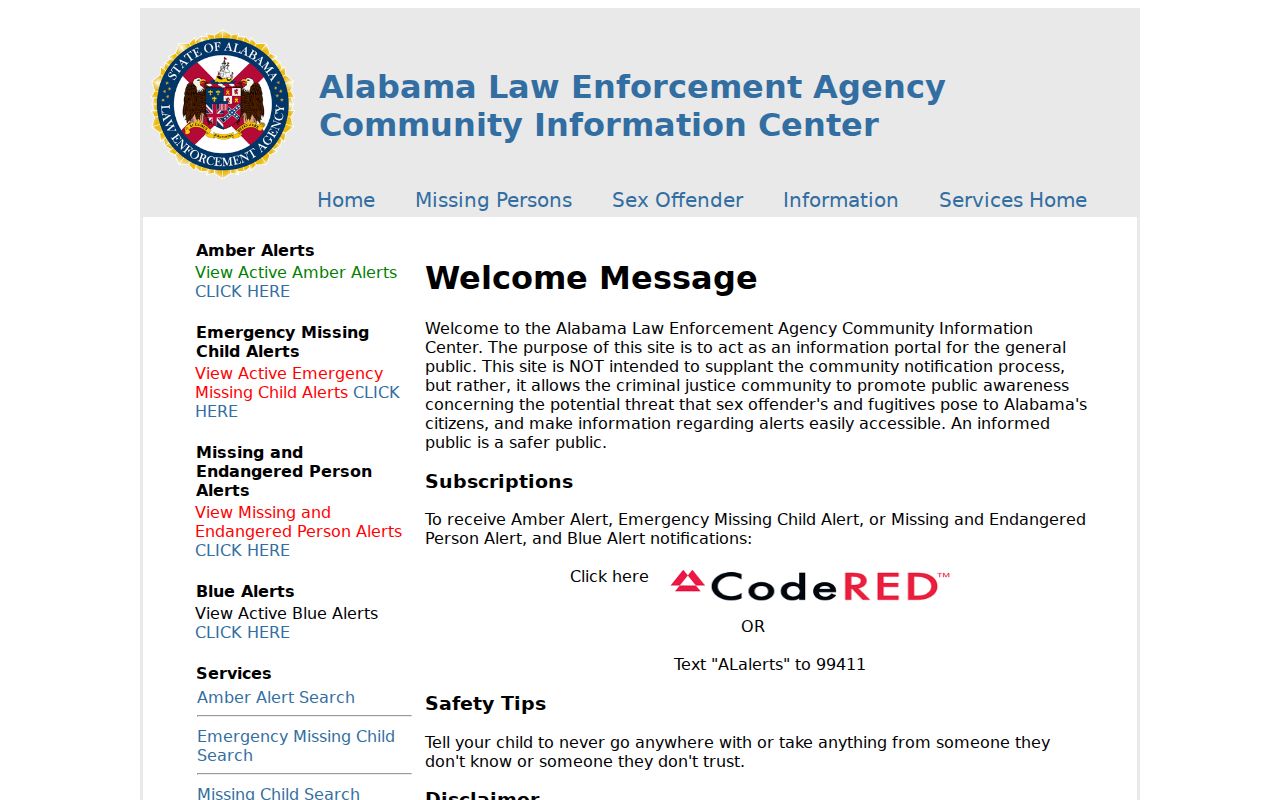
Its role is to begin an official Barbour County search, while live controls should be read directly because the vendor can change them.
Barbour Registry and NSOPW Compared
ALEA is the state-origin source for a Barbour County sex offender search. The U.S. Department of Justice National Sex Offender Public Website, or NSOPW, searches participating public registries across jurisdictions. Use NSOPW when the search may involve another state, territory, tribe, or the District of Columbia. It supplements the Alabama source rather than replacing it.
Search both for a Barbour County person who has moved or when an address lies near a state line. Then return to the source jurisdiction's profile for its current status and legal wording. Different jurisdictions publish different fields and apply different registration rules. A national match still requires careful identity comparison, and an apparent mismatch should be checked with the agency responsible for that record.
The official NSOPW search provides the cross-state layer.
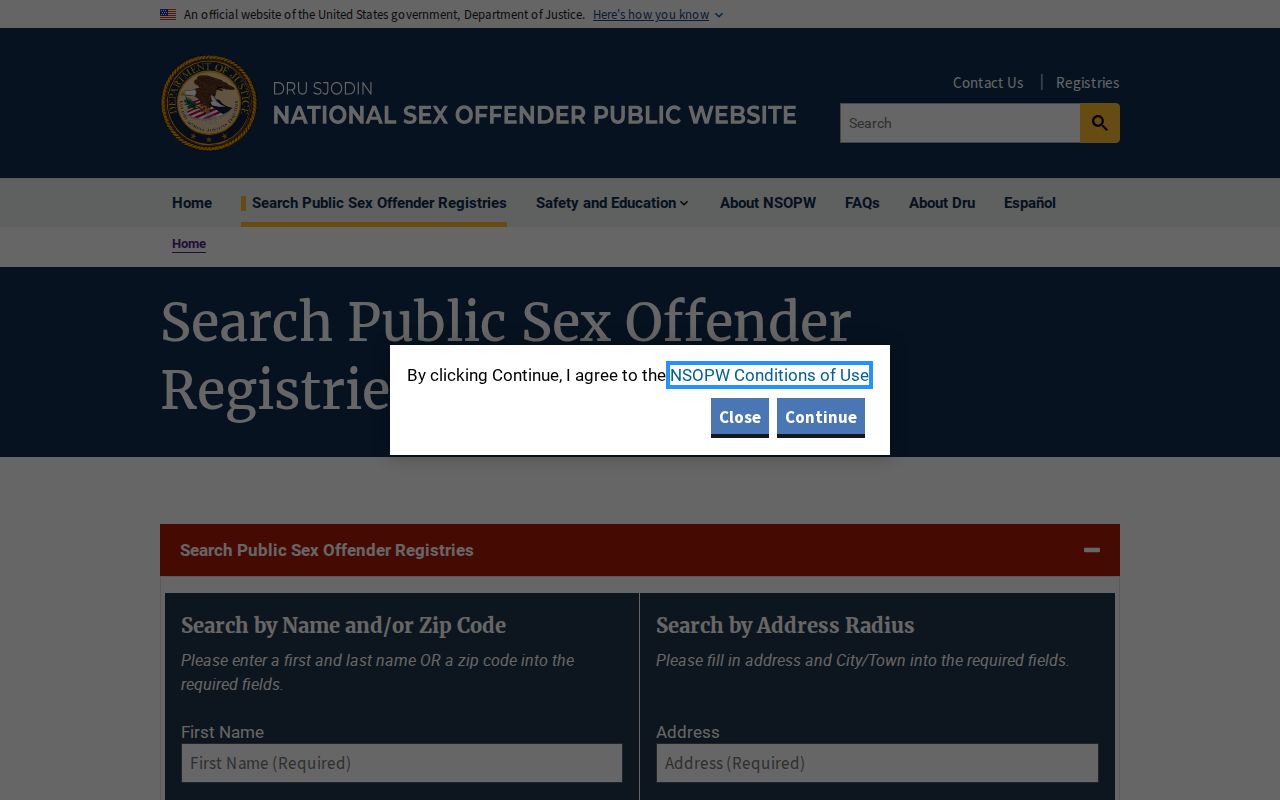
This national view is most useful when a Barbour County home, school, work, or travel location extends beyond Alabama.
Inside a Registry Profile
Alabama Code §15-20A-8 defines a Barbour County public profile. It requires a practical set of identification, location, conviction, vehicle, and status facts, but it also withholds sensitive fields. No private person's profile was copied for research. The inventory below comes from the statute, so it describes what Alabama requires without exposing an individual.
| Name and aliases | Legal name and reported aliases used to distinguish similar identities |
|---|---|
| Photo and description | Current photograph plus the physical description required by law |
| Registered locations | Each residence plus school and employer addresses |
| Vehicles | License and description for land vehicles, aircraft, and watercraft |
| Conviction | Qualifying sex-offense history and the related statutory text |
| Status | Registration or compliance information, including an absconded status when applicable |
| Not published | Victim identity, nonconviction arrests, Social Security number, travel-document numbers, private electronic identifiers, and provider data |
A Barbour County registry entry is not a full criminal-history report. It omits arrests that did not end in conviction and does not expose victim information. For the court record behind a conviction, use Barbour County's criminal court case channel.
The official profile-field statute separates the public facts shown for Barbour County from protected data.
That statutory split helps readers use a profile for identification without expecting private or nonconviction information.
Why Barbour Profiles May Be Missing
A missing Barbour County registry profile does not prove that no sex-offense record exists. Public appearance depends on a covered conviction, release status, and the rules that apply to the person. ALEA notes exceptions or added procedures for some juvenile adjudications, youthful-offender matters, and out-of-state, federal, or tribal convictions. A first conviction for indecent exposure or sexual misconduct may also fall outside posting under the current coverage rules.
Timing for a Barbour County update matters too. Local law enforcement must verify and submit information before ALEA can publish an eligible update. If the live form is blocked by a vendor challenge, open it in a normal browser through ALEA's official page. For a specific Barbour County address concern, call the Sheriff's Office rather than inferring that an empty search result resolves the question.
Alabama Registration Levels and Requirements
For Barbour County registrants, Alabama does not use a public Tier I, II, and III duration shortcut as its controlling scheme. Its registry is offense-and-status based. For an adult covered by §15-20A-5, public registration begins after conviction and release, and Alabama's Sex Offender Registration and Community Notification Act generally imposes lifetime duties unless a statutory relief rule applies. The public table should reflect those categories, not invented tiers.
| Offense or status category | Visibility or duration | Reporting point |
|---|---|---|
| Adult covered by §15-20A-5 | Public after conviction and release; generally lifetime duties absent statutory relief | In person during the birth month and every three months afterward |
| Juvenile adjudication | Not ordinarily public; ALEA notes a high-risk juvenile exception | Depends on the governing juvenile rule |
| Youthful offender | Not ordinarily public; ALEA notes an exception when the person was over 18 at the offense | Depends on the applicable status |
| First indecent-exposure or sexual-misconduct conviction | ALEA says not posted, subject to current statutory coverage | Confirm the current offense rule |
| Out-of-state, federal, or tribal conviction | Posting may wait for Alabama's due-process determination | Begins after the required state determination |
Quarterly reporting means an eligible adult reports during the birth month and then every three months. Barbour County residents should call the local registration office for current appointment instructions because those details were not published. The table describes public visibility and reporting, not a prediction of behavior.
Barbour Community Notice Distances
Alabama Code §15-20A-21 ties neighborhood notice to population and place. Eufaula is Barbour County's only profiled city above 5,000 people. There, the police chief, or the sheriff if no chief serves, notifies residences within 1,500 feet. In Clayton, Clio, other municipalities under 5,000, and unincorporated parts of Barbour County, the sheriff's notice reaches residences within 2,000 feet.
Barbour County schools and childcare facilities receive notice within three miles under the same statute. ALEA also describes a 500-foot anti-loitering rule when the registrant's victim was under 12. These distances define official duties and restrictions. They are not directions for a resident to confront, follow, or investigate anyone. Contact local law enforcement when a notice or registry address appears inconsistent.
Note: Eufaula's 1,500-foot notice rule differs from the 2,000-foot rule used in Barbour County's smaller places and unincorporated areas.
Barbour Profiles Are Not Risk Scores
Publication of a Barbour County profile shows that a person falls within Alabama's registration law. It does not mean ALEA made an individualized finding about present danger or the chance of a new offense. A sound Barbour County sex offender search compares the listed identity and status, uses official notices for awareness, and avoids claims the profile does not support.
Similar names in Barbour County, changed addresses, and processing time can lead to mistakes. Verify a local concern with the sheriff or the police agency responsible for the address. Call 911 for an emergency. Do not approach a registrant, attempt surveillance, or post unsupported accusations. The registry is a public-safety information source, not a tool for vigilantism.
Community Notification and Lawful Use
Barbour County registry information supports personal, family, and community awareness. Use the official profile to understand identity, reported locations, conviction history, and registration status. Then use official law-enforcement channels for a correction or compliance concern. Do not republish protected data, add claims that the state has not made, or use the listing to punish a person outside lawful process.
Use Barbour County registry records lawfully: Alabama Code §15-20A-8 requires a warning against using registry information to injure, harass, or commit a crime against a registrant. Never confront a person or use the profile for vigilantism.
When a Barbour County address looks stale or a person appears noncompliant, record the profile details without spreading them and call local law enforcement. That route lets trained staff verify the facts and send any needed update to ALEA. Public awareness and safe reporting are the lawful uses that fit the registry's purpose.